








Tag: Career Choice

10 things you should be doing while you’re unemployed
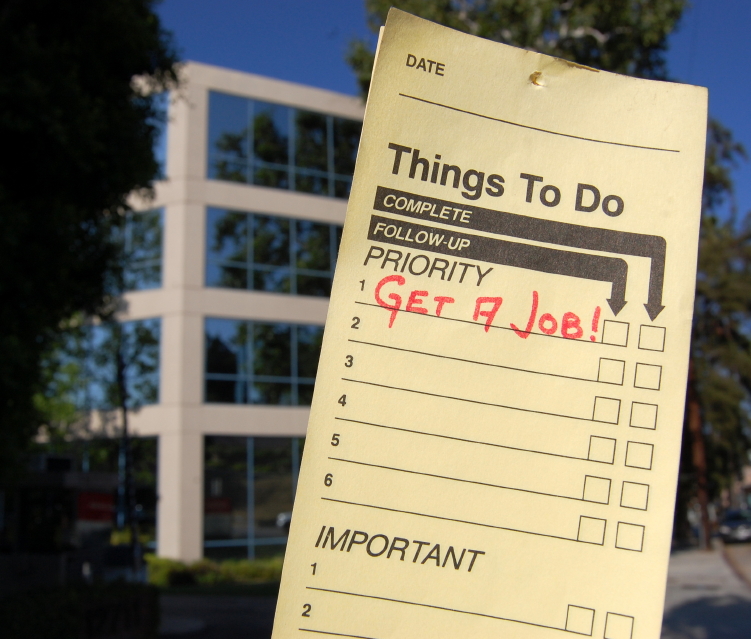
Article by Belinda Fuller

10 things you should be doing while you're unemployedMany successful clients who become unemployed don’t realise how long it can take to secure a new role. Despite indicators the job market is improving, redundancies and unemployment continue to dominate news.

Regardless of your background, or previous success, if you’re unemployed, you can feel a little lost, anxious or lacking in confidence. Even if you chose the period of unemployment by leaving a previous role voluntarily, it can still be difficult. Despite this, there are ways to feel better. Whether you’ve been searching for a new role for a while or just taking a planned break, there are many things you could be doing to boost your chances to secure that next role.

  1. Stick to a schedule: While it might be tempting to sleep in every day and while away the days reading a new book or catching up on your favourite TV series, it’s best to treat Monday to Friday like a working week. Get up at a reasonable hour, dress like you’re leaving the house (even if you don’t), and aim to complete some job search tasks every day. By all means take some time out, but sticking to a schedule is a great way to introduce some positive new habits like regular exercise or a healthier eating regime; or tend to those activities that you never had time for while working full time.
  2. Consider your future. Take this opportunity to really think about whether you are in the right career. Research your market and decide if it’s in good shape. Think about whether you could undertake study or work towards diversifying your skills to move into another area.
  3. Prepare yourself: Think about what your perfect job looks like. Research job sites and the careers sections on individual company’s websites. Meet with recruitment companies and revamp your resume, cover letter and LinkedIn profile or enlist a professional to prepare a resume and cover letter for you. Develop a job search strategy and start submitting applications.
  4. Think positively: When faced with challenges, we can be prone to negativity. Accept it may be a challenging period and this is a natural emotion, then try to encourage positivity by engaging in activities that help you think clearly and optimistically.
  5. Volunteer: This is an excellent way to use your extra time while helping to feel valued and more confident. It can also provide opportunities to gain valuable experience and contacts if you volunteer in an area related to your job qualifications. At the very least it will look great on your Resume since it shows initiative.
  6. Consider Contract Work: Another way to fill time between full time employment, is to find temporary work through an agency or previous work contact. Not only that, it can help you find a full time role by exposing you to new areas, helping you develop new skills, increasing your contact network, or even as a result of the temp role turning into a full time opportunity.
  7. Network. The more people you talk to, the better. If you’re not on LinkedIn, now is a great time to create a profile. Invite colleagues to connect and let them know you are seeking new opportunities.
  8. Complete a course: Decide on any certifications or courses that would contribute to your employability. Don’t forget to check out free online courses if you’re not in a position to commit to paid courses. Again, at the very least, it will help you stay busy and focused on something worthwhile, while hopefully helping to develop some new relevant job skills.
  9. Get your finances in order. Depending on your financial situation, you may need to seek financial advice or talk to your bank about loans. Do this quickly, so you have one less thing to worry about.
  10. Seek professional help. Career Consultants provide independent advice and up-to-date information on current job markets. They can help with career transition by advising how to position yourself in the market, identify job opportunities and present yourself effectively to employers. They’ll also help boost confidence and ease some of the anxiety.

There are many things you can do to keep yourself busy, improve your skills and aid your job search. Don’t forget to take some time out to treat yourself now and then and use the time off to attend to personal tasks or home projects that you often put off because you’re too busy.

Would you would like help developing a winning resume, detailed job search strategy, or update to your LinkedIn profile? Perhaps you’d like to work on your interview skills. If so, please see our Career Counselling, Professional Resume Writing Services and LinkedIn Writing services.

If you are an employer and would like to assist employees through redundancy to help them secure a new role, please see our Outplacement Services.

Research your way to the right role

Article by Belinda Fuller

Research Your Way to the Right RoleMany of us are lucky enough to fall into fulfilling careers. Whether it’s by luck, meticulous planning, or sheer hard work, these people seem to be made for what they do! But what about the others who’ve never been 100% sure? Whether you’re a school leaver or mid-life career changer, a little bit of research goes a long way, but where should you start?

A friend of mine recently asked me if I thought her son should choose Human Resources for his major. He’s in his first year at University and loving his Commerce degree, but he needs to choose his major for next year. He’s only been at University for about eight weeks but he has to choose from multiple options soon and he’s just not sure. She asked me if I thought HR was a good career path since I have experience in that area – but without knowing her son very well, I couldn’t say. I asked her what he was basing his decision on and she wasn’t really sure. It got me thinking about how many people just choose something to go after because they like the sound of it.

Another friend of mine has a daughter who recently decided she wants to become an event manager. She researched an expensive course and wants my friend to spend thousands of dollars on it – but her decision didn’t seem to be based on anything concrete either – simply that she liked the sound of being an event manager. She isn’t an overly organised or detail oriented person, so I asked my friend if his daughter had given any thought to the meticulous planning involved, the long hours, and the weekend and after hours work that invariably comes with being an event manger and he didn’t really think so.

Often, people go into careers without doing much research. They like the sound of a career but they’re not overly familiar about what’s involved in doing the job on a day to day basis. There are many ways you can research careers – and by doing so, you’ll gain a better understanding of what might be required and whether or not you’d be suited. Here’s a few ideas:

  • Use Online Job Sites: SEEK, CareerOne or any one of the many other online recruitment sites can provide a wealth of information about different careers. You can access current information on salaries in specific industries/positions, find out what qualifications and/or previous experience you might require, and you can get a feel for what you might be doing on a day to day basis. A great tip I heard from another career consultant was to combine unrelated keywords or phrases to identify unique or unusual roles – for example a skill plus an interest – such as ‘marketing’ and ‘photography’.
  • Talk to People: Talking to people who are already working in the field you are interested in can provide a better understanding of what might be required as well as giving you a feel for what your day might regularly look like. Don’t be swayed by one person’s opinion though – try to get as many people’s thoughts as possible and probe them about the pros and cons of the role. Look to your LinkedIn network for contacts who might be able to help.
  • Volunteer: This could take the form of ad hoc volunteering or a more formal internship. Volunteering gives you the opportunity to learn more about a role or organisation, as well as providing valuable work experience and new skills that will help to build your confidence to go after those sought after roles. It could also provide much needed networks and mentors in your area of interest.
  • Join Professional Associations: Attend meetings or check the website for information, networking events or other opportunities that you might be able to leverage. If you don’t belong to a professional association already, consider joining one – often these associations have associate memberships for juniors or people with little experience, but you have access to similar kinds of opportunities and information as fully fledged members.
  • Take a Career Assessment: Many organisations offer personality assessments and/or career interest tests. These tests can assess your interest in a variety of activities, industries and occupations to provide insight into the careers and areas of study you are most likely to enjoy and be ideally suited to. For more information, see our Career Interests and Personality Profile tests.
  • Talk to an Expert: Career Counsellors can provide a much needed ‘outsiders’ perspective on what you might like. They are usually trained experts that also have a wealth of practical work experience across diverse areas and industries. They have deep knowledge of a wide range of occupations, industries and courses and will give you professional, independent advice on your career, course and employment options.

Our last piece of advice (but by no means least) is to take the first step – if you’ve done some research and you think you’re ready, just take that step. We now know that most people will not stay in the same career for a lifetime, so don’t procrastinate for too long.

Would you like career advice to assist you to choose a career that’s right for you? If so, please see our Career Counselling Services.

Are you confusing recruiters?

Article by Belinda Fuller

Are You Confusing RecruitersMost people have developed a diversity of skills and experience throughout their careers that have made them the person they are today. But many people we talk to find it difficult to consolidate all those skills and experiences into a clear picture of exactly why they’re right for a role – especially if it’s slightly different. If that sounds like you, you’re not alone.

I sat down to write this month’s newsletter article following a call with a client. This client was lovely to talk to and he had a raft of experience, skills, perfect qualifications, and previous success but he was struggling to get any interviews. Over the past three months, my client has submitted a lot of applications and mostly just heard nothing or received the standard ‘thanks but no thanks’ response. He knew he was perfect for many of these roles and understood that his approach was wrong which is why he’d come to us.

When I looked at my client’s current Resume, the person on the end of the phone just didn’t match what was in that document. I can’t tell you how often this happens. I will sometimes receive a copy of my latest client’s current resume with a link to the job they’d like to apply for and I honestly believe that I have the wrong two documents together – they just don’t look like they’d even make a slightly suitable candidate.

In most cases, they would in fact make a great candidate but the problem lies in relevance – and first impressions count. Most candidates have developed great skills and experience but they simply don’t present them in the most relevant and effective way. Recruiters often receive hundreds of applications for a role so being able to demonstrate your suitability quickly is key to your success. Here’s a few tips:

1.  Create a quick summary of who you are – include your background and key successes – it’s a branding statement or quick elevator pitch if you like. Work out what you can offer, and the value you will bring to your new employer, then articulate that in a clear and concise paragraph or two.

2.  Highlight your key capabilities – these are the things that make you an ideal candidate for a specific role. This is so important because key capabilities are going to be different for everyone – they may also differ for you depending on the role or company you’re applying for. Capabilities cover a diverse range of areas such as qualifications, experience, technical skills, personality traits, soft skills, computer skills, industry knowledge etc. but they will vary significantly from person to person and role to role.

3.  Customise your content to make it highly relevant – when you’re applying for a specific position, it’s important to work out what’s important for that role and demonstrate how you provide that expertise. Remember this varies for different roles so taking the time to customise is important. This includes mentioning specific skills you may think are ‘standard’ in your industry – if they are mentioned in the job ad, there’s a good chance they are highly important so don’t just assume that the recruiter will think you have them.

4.  Simplify your content – get to the point quickly and try not to provide too much detail. This includes making sure you articulate any acronyms that might confuse the recruiter. Following the requirements in the job ad also helps – to the point of changing your job responsibilities to match those of the recruiter – if that’s what you did in a previous job, articulate it clearly and concisely.

5.  Consolidate or change your job history – especially if you have lots of different jobs at the same company – try consolidating them to provide clarity. If your relevant experience is a few jobs ago, try moving it up and calling it ‘relevant work experience’ – again thinking about fast and relevant impact for the recruiter.

If you’re not sure whether your Resume is up to scratch you may need assistance from an expert. At the very least, ask for feedback from someone you can trust – preferably someone in a similar line of work to you is ideal. If they can’t see how you’d make a good candidate for a particular role, then a recruiter may not either.

Do you think your Resume might be confusing recruiters? Are you interested in getting assistance from a team of Professional Resume Writers to provide more clarity? If so, please see our CV & Resume Writing Services and Job Search Coaching Services.

How to choose a career that’s right for you

Article by Belinda Fuller

How to Choose a Career That's Right for YouSome people have always known what they want to be when they grow up – how lucky are they? Especially if it all works out for them. For most of us though, it can take some time to work out what’s right in terms of a career. I’ve written before about being happy at work and Success vs Happiness. It’s many people’s lifelong pursuit. But what makes a career right for one person can be very different for another. Here is a list of initial dos and don’ts when thinking about what career might be right for you: 

Do: work out what is important to you – because this will be different for everyone. You might just want to be happy but that is often about looking at what you value most. Some people need to help others as part of their day to day role, others need to use their creativity, some prefer working alone, and others need to be part of a large team environment, or lead and direct people. Maybe flexible hours is your primary need, or are you driven to achieve a high paying or powerful job which you are prepared to work hard for. What’s most important is going to be different for everyone and for many people it can change several times depending on what stage of life they’re at.

Don’t: do what other people think you should do or get too hung up on what your friends or family are doing. Certainly be guided by those who care about you, but sometimes, these people who know us best have misguided views about what career would suit. I know that from first-hand experience!

Do: work out what you’re good at. It doesn’t have to be focused on ‘your passion or doing what you love’ – it’s more about working out what you enjoy doing or are good at and moulding a career around that. Think about using your strengths as a starting point. Maybe you want to work in events but you’re creative and not very detail oriented – an event management role may not be right for you, however, you could look at other areas such as event theming, design, production etc.

Don’t: cave to pressure from parents to follow in their footsteps or do something that they consider ‘safe’. Someone close to me wanted to study art after leaving school but was pressured by his parents to study law instead as a more stable career. He never enjoyed his work and it took him almost 20 years to go back to university and study art and design – he now has an extremely successful and thriving business that he is absolutely passionate about.

Do: research your career. Another friend of mine chose a degree later in life and found it really hard to actually get a job once she’d finished studying. The area was fairly new and experiencing some growth but was still quite niche – and it was a popular choice for school leavers. So while she was in her 40s wanting to get into this new area, there were rafts of younger graduates taking the few jobs that were available. In this instance youth was considered more favourable than life experience and that’s something she hadn’t ever considered.

Don’t: ignore your personality because these traits are ingrained in us to make us the unique person we are. It’s what makes one person better suited to a particular occupation or career than the next. Often taking a personality profile test can be a big help.

Do: consider location. Are you a city or rural person? These days, location is becoming less important, however some careers just aren’t viable in rural areas. Likewise, there aren’t many farmers in the Sydney CBD! If you really love where you live and aren’t open to relocating, make sure there are opportunities available in your chosen career.

Choosing a career no longer needs to be a lifetime commitment – you can always head down another path later. But always do your research up front – about yourself, your personality traits, your interests, and where the field you’re interested in is heading.

Would you like assistance choosing a career that’s right for you? If so please see our Career Guidance and Coaching Services.

Where to From Here?

Article by Belinda Fuller

Where to From HereEach year, the Department of Employment produces employment projections by industry, occupation and region for the next five years ahead. These projections look at Australia’s future labour market and are interesting for students leaving school this year and heading into the world of study, but also for anyone keen to maintain their skills and knowledge to move into different career areas should the need arise. What careers are likely to be in most demand by 2018 and where is demand shrinking?

While a crystal ball would help us predict the hot spots, projections based on detailed Australian Bureau of Statistics (ABS) employment data from 2013 indicate strong growth in certain sectors. Of course unforseen economic, natural or other situations or disasters could occur between now and then which may result in these projections shifting slightly or significantly, however they give us a good place to start.

In summary, The Department of Employment projects employment to grow by 7.2% over five years to November 2018 with 16 of the 19 broad industries predicted to grow. However, of these 16 industries, many will experience only slight growth and declines in employment have been projected for Manufacturing, Mining and Agriculture, Forestry and Fishing. There are five top industries which are projected to provide more than two thirds of the anticipated employment growth.

So what are the industries to watch?

  1. Health Care and Social Assistance is projected to make the largest contribution with one quarter of the projected total employment growth (increasing by 229,400 or 16.3%);
  2. Education and Training is second (118,800 or 13.3%);
  3. Retail Trade is third (98,200 or 7.8%);
  4. Professional, Scientific and Technical Services is fourth (88,700); and
  5. Construction is fifth (83,500).

What’s driving the growth?

Many factors contribute to (and impact) this strong projected growth including (for Health Care and Social Assistance), the implementation of the National Disability Insurance Scheme, Australia’s ageing population, and the increasing demand for childcare and home based care services.

For employment in Education and Training, projected growth will be driven by above average growth in the school aged population and continuing growth in part-time workers and non-teaching staff. Retail industry growth reflects recent increases in consumer confidence and the ongoing support of historically low interest rates.

So What Does it All Mean?

A tough or shrinking market doesn’t mean the end of your career or long term unemployment. It’s all about survival of the fittest. Whatever field you work in, it is essential that you understand how your industry is performing – both locally and globally. Then, it is always important to remain flexible and optimistic since industries, careers and jobs are changing constantly. The people who are successful embrace the changes we are experiencing and use any setbacks as a way to learn. Everyone can benefit from diversifying their skills and knowledge or learning about new areas.

We wrote a relevant article this time last year. Now might be a good time to go back and read this article about future proofing your career. Future-proofing your career means many things – primarily the need to constantly listen, learn and plan. It might include studying a different field, taking on part-time jobs or volunteering to learn new skills, going freelance or starting your own business.

Are you worried about long term career viability? If you would like a Career Coach to help you evaluate how to maximise your career opportunities for the future, please see our Career Counselling and Coaching Services.

Career Advice and Planning Tips

Article by Belinda Fuller

Career.Advice.and.Planning.TipsAre you feeling unhappy in your current job but unsure what to do about it? Are you a recent graduate who doesn’t know which career path to take? Do you have experience across many different areas but don’t know how to best present yourself to potential recruiters? The career planning process can be complex, but it is one that should be undertaken on a fairly regular basis in order to ensure you are on the right track to achieve the success you desire and deserve!

Follow these steps to start planning for your success today:

STEP # 1: TAKE STOCK. This first step requires you to sit down and look at your current situation. Think about the kind of work you enjoy and write down your goals for the future – what direction would you ideally like to pursue? If you have absolutely no idea, give some thought to the kinds of tasks you enjoy doing as well as what you’re good at. At this point, it is important to be aspirational – research online and look up job sites for roles you think you would enjoy over the long term.

STEP # 2: LIST YOUR SKILLS & KNOWLEDGE. In this second stage, you should list your current skills, knowledge and experience – then think about how useful they could be. Ask yourself where your strengths and weaknesses lie – both personally and professionally, then think about how they might help you achieve your aspirational role. At this point, you should involve other people – professionals, family, work colleagues you can trust – to help clarify your direction. You could also consider taking a professional career assessment to better understand your interests, values and personality and help narrow down options.

STEP # 3: WRITE DOWN YOUR GOALS. Based on your initial research and thoughts, you now need to clearly articulate your broad career goals and think longer term regarding where you’d like to be in five and ten years’ time. Identify areas for improvement – what experience, knowledge, skills and qualifications do you need in order to succeed?

STEP # 4: RESEARCH RESOURCES. It is important now to identify available resources. Look everywhere – courses, contacts, technology, online resources, etc. Consider the financial, family, study and other impacts you will experience if you were to pursue your goal. If you need to study, research providers and decide whether you can complete some study part-time while still working. Identify whether or not you can gain relevant skills in your current role and find out if there is an opportunity for volunteer work to help you gain experience.

STEP # 5: DEVELOP A CAREER PLAN. A well-structured career plan will clearly outline your goals and milestones. You should include action points to help you succeed, but remain flexible to change if need be. Include areas for development that cover skills, experience and education or training; as well as networking with individuals and finding out more about specific companies or industries. Identify your important transferrable skills and how you can best present those to potential employers. If you can, find a mentor who can help you through your transition.

STEP # 6: IMPLEMENTATION. The final and most important step of course is to start taking action to implement your plan!

Are you in charge of your future career direction? If not, consider seeing a Career Counsellor for an independent perspective. Career Counsellors are trained professionals who can help you achieve your full potential in your career. Wherever you are on your career path, start taking those initial steps today towards achieving your future career goals.

If you would like help from a Career Coach to evaluate your options for a new career or better understand the options that best suit your interests, values and personality, see our Career Guidance and Career Counselling services.

10 Tips for Work Life Balance

Article by Belinda Fuller

10 Tips for Work Life BalanceWork is an essential part of life that many people feel drained by. If you are not consistently challenged and energised, it may be time to think about a change. If you think you just need more balance in your life, you may be able to achieve it by altering a few simple things.

If you run your own business, you’ll know it provides the flexibility to work your own hours, but often we end up working harder and longer than ever before. Finding a balance between work and life can be challenging and the perfect situation is different for everyone, however with a little effort, it can be done! Here are some general tips to get you started:

TIP # 1 – Decide what’s important to you. Working less doesn’t mean better work life balance for everyone. So long as you are happy with the amount of time you dedicate to each part of your life, you’ve probably achieved your best version of work life balance. Decide on your priorities. What would you like to do more (or less) of? Think about what you need to focus on and try to eliminate the stuff that doesn’t really contribute to that.

TIP # 2 – Establish working hours. Set boundaries for yourself and others. If you work from home, try to walk away from your office space at a set time every day. And if you work in an office – try not to take work home unnecessarily. Of course, unplanned events do occur but finishing up at a set time every day to spend planned time with family or friends is a good idea. Likewise, make sure friends and family know not to interrupt you at work unless it’s an emergency. For most people, it would take a big personal emergency to reschedule something important for work. Give your personal time the same respect and try not to ‘reschedule’ it unless absolutely necessary.

TIP # 3 – Switch off your phone, your laptop, and your tablet – anything that’s keeping you connected to work so you can spend time doing whatever it is you would like to do. If you’re spending time with your family or partner this is especially important. We need time to focus on personal relationships. Even if you just switch off for an hour or a meal, try to do this every day. Turning off technology allows us to give people our undivided attention for short periods of time which goes a long way towards improving work life balance.

TIP # 4 – Track Your Time. Not all the time, but try it for just a few days. Tracking how much time is spent on tasks opens our eyes to opportunities for time savings. Then eliminate things that aren’t productive, delegate where you can or consolidate – often we do things without actually thinking about whether it’s 100% necessary.

TIP # 5 – Try to schedule ‘time off’. This includes holidays and weekends. At a minimum you should try to schedule two weeks off each year and try not to work on weekends. This doesn’t mean you need to book an expensive holiday. Some of the best holidays I’ve had have been ‘staycations’. Stay at home and enjoy what your local area has to offer. We often get so caught up in our day to day work that we miss all the fun stuff right under our noses. Time off helps you feel refreshed and recharged and will contribute to you achieving your best levels of productivity.

TIP # 6 – Schedule something enjoyable every day. For me that’s exercise most days. If that’s not for you, schedule something else you enjoy doing. Even if it’s just a quick walk or coffee catch up with a friend or colleague, some gardening, cooking, pottering in your workshop, or reading a book. It could simply be some quiet time to yourself doing nothing – it certainly doesn’t need to be expensive or time-consuming.

TIP # 7 – Look after yourself. Not eating well, getting enough sleep, keeping hydrated and making sure you get enough exercise are all factors that affect your ability to achieve work life balance. Getting good nutrition and exercise will help you feel happier and achieve higher levels of productivity in the longer term.

TIP # 8 – Don’t sit still. Aim to get up from your desk at least every two hours. Try to do it before your concentration wanes and your attention flags. Get up, have a stretch, grab a glass of water, take a quick walk around the block for some fresh air – just do something that gives you a break from working and clears your head for the next task.

TIP # 9 – Say no! You don’t need to be ‘available’ for work all the time and you don’t have to say YES to everything. Learn to say NO sometimes and feel more in control.

TIP # 10 – Consider a change. If your job is so stressful and draining that you can’t change the way you’re feeling about balance, it might be time to start thinking about a career move.

Studies show that a poor work-life balance can cause stress, unhappiness, and reduced productivity. Implement some (or all) of our tips and start working to live instead of living to work today.

If you would like personalised help from a Career Coach to evaluate alternative career options to achieve a better work life balance, please see our Career Counselling and Coaching Services.

Is it Ever Too Late to Change Careers?

Article by Belinda Fuller

We recently posted a graphic on Facebook which showed some highly successful people who made it big after they hit 40. People like the founders of McDonalds, Coca Cola and KFC (in fact – these three were all in their 50s). It really hit home. While there are millions of entrepreneurs out there in their teens and 20s, it prompted us to ponder this question.

Clients often seek our advice on whether or not they are too old to change careers.  As a generation, we are living longer with better health and higher levels of vitality than ever before, so what age for change is really too old?

The answer to that question is different for everyone. It depends on many factors which can only be evaluated by each individual. Everyone has different levels of risk tolerance and adaptability to change and for many a major career change is just too challenging. But for others, there may not be any real reason to wait any longer.

Since the opportunities for study these days are endless, there may no longer be the barriers previously experienced in gaining qualifications needed for a new career path. Just about any qualification you need is available via part-time, full-time, online, distance or on campus options, or in varying combinations of them all. Different budget levels can also be catered for with payment choices designed to suit just about any situation. Changing your career later in life may be easier than you think.

We meet many people in our day to day work who change careers much later than might be considered ‘normal’ or ‘ideal’ with most of them thriving. Being able to handle the physical demands of a new career can appear daunting to some – with many people believing their energy levels won’t cope. But we believe the opposite is true – when you’re doing something you truly enjoy, your energy levels will naturally be higher because passion fuels energy and drive.

In addition, the benefit of life experience cannot be underestimated. This means many late career changers enjoy immediate success with the wisdom and experience they have gained over the years. Many soft skills such as being able to get along with different personalities, negotiating mutually agreeable outcomes and knowing how to get the best out of people, identifying and dealing with issues, dealing with procrastination, and generally taking advantage of the networks built over a full working life will all contribute to success.

It’s never too late to change careers to do something you love. I recently found out that one of my favourite resources when writing – the Thesaurus – was first published when its author was 73! Although an accomplished doctor, lecturer and inventor, it was Peter Roget’s dictionary of synonyms that made his name. Since it was first published in 1852, it has never been out of print.

If you’re yearning for a change, do some research to find out what you can achieve. Even if you have lifestyle, family and/or budget concerns, you might be surprised at what is possible.

Are you thinking about a changing careers but not sure where to start? Do you think it’s too late in your life to consider a change? There are several articles on career change on our blog which can be viewed by clicking here. One particularly relevant article is our post entitled – Want to Change Careers? Here is a Step by Step Plan.

If you would like personalised help from a Career Coach to evaluate your options, please see our Career Counselling and Coaching Services which can be provided over the phone or in person in locations across Australia.

5 Tips to Plan Your Return to Work

Article by Belinda Fuller

iStock_000021229640Small (1)Whether you have just finished a short period of maternity leave, or you’re returning from an extended career break, there are many things to consider. Whatever your reasons for taking the break in the first place, you may not be feeling so confident about your return.

When you’ve been out of paid work for a period of time – it’s sometimes difficult to know what to expect. Your industry may have gone through changes or you may feel that your skills have fallen behind. Whatever your reason for the work break, it’s now time to look to the future and take those first steps in getting back into the workforce. Here’s five tips to help you on your way.

1. Decide What Type of Work – Think about how you’d like to return. Would you like to return to work full-time or part-time? Would you consider contract or temporary work to start with? Do you want to work in the same or similar field as before or would you prefer to re-train in a slightly different or completely new area? What work can you do with your current skills? Do you have long term goals of where you’d like to be and are you willing to work towards those – through re-training or starting with an entry-level job? Or are you simply looking for a job at this stage to fulfil some financial and/or working goals?

2. Research the Field – Use the internet to research and read everything you can about your career/field of choice. Find out about any current opportunities and/or constraints, attend seminars/lectures/webinars where relevant, and talk to people already working in the field to hear their thoughts on how you might succeed. Once you have done that, research current jobs on offer using online job search sites, LinkedIn, direct company job boards etc. to better understand the specific skills and expertise you might need to succeed.

3. Develop Your Offer – Once you have decided what you want to do, you need to work out what you have to offer. Assess your values, interests, strengths, weaknesses, achievements, abilities and goals and be clear about your qualifications, skills and experience in the context of the jobs you are applying for. Put your recruiters’ hat on for a minute and think about what you have to offer that might make you stand out from the next candidate. You should also think about areas for development. Time away from paid work can leave you feeling nervous and apprehensive, but try not to think about the negatives at this stage. Don’t worry about looking bad to potential employers for spending time away from the workforce because career breaks are common for many reasons these days. Think about how you’ll overcome your negative thoughts in an interview because it’s hard to be confident if you’re worried about how to explain your break. Whatever the reason for your break, be honest and focus on the positives. You should talk about the skills and knowledge you can offer and how quickly you will be productive. Consider getting some advice from a trained Career Counsellor at this stage because they can help you formulate a response you’re comfortable with.

4. Put Together Your Job Search Material – Prepare a killer Resume that makes you feel confident. Make sure it is up-to-date, clear, concise and tailored towards the roles you are seeking. Research current Resume trends, ask a friend who knows about recruitment to help, or enlist the services of an experienced Career Consultant. Re-package your current skills to suit the roles you are applying for. Think about participating in training if you need to up skill. Write a customised cover letter for each role you apply for. Update (or create) your LinkedIn profile and achieve as many connections as you can. For inspiration, visit our Career Advice Blog for a broad range of articles on job search strategies, LinkedIn, Resume Writing, Selection Criteria preparation and Career Counselling.

5. Get the Word Out – Start applying for positions, tell everyone you know that you’re looking for work (and what you’re looking for). Update your LinkedIn profile to announce the fact you are seeking new opportunities and don’t overlook contract positions which could turn into a longer term role. Think about volunteer work, or internships if you have very little experience in the area you’d like to work – this may help you achieve the experience (and contacts) you need to succeed.

It’s important to set yourself some short, medium and longer terms goals since you may not achieve your ideal or ‘dream’ job straight off the bat. Understanding that you might need to work in a lower paid or less than ideal position initially to gain some experience will help you survive. If this is the case, you should aim to quickly gain the experience, training and skills required to move on to the next level. For more information on job search strategies, visit our Blog.

Would you would like assistance from a Career Coach to help you prepare to return to the workforce? Have you been applying for roles but don’t feel you’re achieving the success you deserve. If so, please see our Job Search Coaching Services.

Turn What You Love Into a Career

Article by Belinda Fuller

Turn.What.You.Love.Into.a.CareerTurning our passions into a viable career is a lifelong dream for many people. You probably know at least one person who loves art or music and dreamt of being a painter or musician but were persuaded to pursue something ‘safer’ and more ‘financially secure’. The benefits of hobbies and interests outside of work have long been heralded as the way to achieve a work life balance, but for many people, their hobbies turn into their careers.

While career options that provide secure paths provide the basis of comfortable living and regular work, if you aren’t working in a job that you love (or at least like most of the time) and that fulfils your values, it is unlikely you will ever feel truly happy.

I have several personal friends who’ve taken their passions and turned them into careers – a friend with a lifelong passion for health and fitness became a highly successful personal trainer in her thirties. She gave up a high paying account management job to go it alone and after five years has a successful business that she loves. Another friend was always very artistic as a child and teenager but chose teaching as a stable and comfortable career. She has now developed a fabulous career helping people from all walks of life through the practice of Art Therapy – combining her passion for teaching with her passion for art. Another one discovered his love of gardening after transforming his own home’s outside area and has since developed a very successful gardening business.

Your hobbies might seem like a pipe dream for a career but often they are very achievable.

Some steps to help get you started include:

  • Just take that first step – If you are unhappy with your current career, just taking some simple steps to improve your situation will help. That doesn’t mean you have to quit your job to find your passion, but it does mean taking some action today in order to improve your situation.
  • Think about your interests – If you have worked in the same job for many years, chances are you may not even remember what you’re passionate about. Start paying attention to things that interest you. What are your hobbies? Do you even have hobbies? If not, ask yourself what you enjoy doing and try to seek out ways to incorporate more of those activities in your day to day life.
  • Consider taking a short course – There are some wonderful short courses on offer at community colleges to help you get a taste for what a new career might look like. You can try out a course to see if you like it before enrolling in a diploma or degree course in that field. If nothing else, these courses can provide great stress relief from the day to day grind and help you achieve that all important work/life balance that is so elusive for many of us. They also provide an ideal opportunity to meet new friends with the same or similar interests to you.
  • Investigate specific jobs – Once you have an idea of what might be a fulfilling alternative to your current career, do some research about that job or job opportunities to find out what changes you’d have to make or any training you may need to undertake in order to work in that field.
  • Seek professional advice – if you’re having trouble narrowing down what really interests you, consider the services of a Career Counsellor to help steer you on the right course. Take a Career Assessment or participate in a one on one coaching session. A Career Counsellor can help you identify your interests and values in order to ascertain the types of jobs that you would find most satisfying. The results may surprise you and possibly lead to careers you may never have considered previously.

Discovering what you want to do in life is, for many people, a life-long pursuit. From the time you leave school (even before) you start making decisions about what career would best suit you, but many of us end up choosing something quite different to what we originally intended – either out of necessity based on results, or availability of study options or jobs, or perhaps by choosing a career that you might see as ‘more secure’.

Are you having difficulty finding true happiness in your career? Have you tried to evaluate your options in order to choose a different path? If you would like help from a Career Coach to find your passion or turn your passions into a new career, please see our Career Counselling and Coaching Services which can be provided over the phone or in person in locations across Australia.