







Tag: Career Counselling

Alternative pathways to achieving your dream career

Article by Belinda Fuller

Alternative Pathways to Achieving Your Dream CareerIf you’re someone who’s always known what you want to be when you grow up – think yourself lucky! Not many people have a childhood passion that leads them directly to their dream career. For most people, figuring out what to do can be a confusing and frustrating process. There are endless options and countless considerations. However, these days the path to that dream career isn’t necessarily straightforward.

Figuring out what to do for the rest of our lives can be daunting. It can be especially so for new school leavers focused on their final year and thinking about what to do when they leave. The options are endless – but what should you consider? Should you choose a practical job that provides stability, a good career path and great pay prospects? Or should you follow your passions and choose a career based on something you love?

Following your passions can mean amazing success, but can also come at a cost – it usually involves some level of risk, overcoming fears and judgement by others (often parents), and maybe planning for some kind of fall-back position. As an alternative, many people are happy to indulge their passions on a part-time or ‘leisure only’ basis, while working in a steadier job that earns them their living. This can be just as hard a path to take – with the ‘safe’ option often leading to unhappiness or discontent down the track. If you’re still trying to figure out your dream career, ask yourself the following questions:

  1. What activities do I enjoy?
  2. What are my interests?
  3. What am I good at, what are my strengths?
  4. What do I value the most – creativity or stability?
  5. How do I define success – happy, rich, working hard, etc.?

Then brainstorm related jobs. Now could be a great time to enlist the help of a career consultant who can provide an independent perspective in achieving your dream career potential. Career consultants often use formal assessment tools to better understand where your interests, values and personality traits lie in order to identify the careers, industries and work environments that best suit you. Once you have a list of potential careers, do some research to find out more – what qualifications are required, how competitive is the job market, what shape is the industry in, what salary could you earn, what is the potential progression, is it stable, what are the normal work hours, where are roles located and will you need to travel etc.

So what’s next? If you need to go to university but didn’t achieve the required ATAR, alternate pathways are becoming more popular – allowing you to work while studying, take time off after you leave school before starting university, or even combine local and overseas study. Most qualifications can also be pursued at any time throughout your life with just about any course available via part-time, full-time, online, distance or on campus options, or in varying combinations of them all. The three most common alternative pathways to university study are:

  1. Special Tertiary Admissions Test (STAT) – this test assesses students’ knowledge in various areas considered to be important in tertiary study. Unlike Year 12 qualifications, STAT questions are not purely academic, so if you’re keen on a specific course but didn’t do well in Year 12, you could still have a good chance at gaining entry.
  2. Registered Training Organisations (RTO) – including TAFE and other private RTOs which provide different levels of flexibility and/or course content.
  3. Indigenous Australian Uni-Entry Programs – offered by many Australian universities, and designed for Aboriginal and Torres Strait Islander students who missed out on their university course by only a few ATAR scores. Each university has their own set of requirements and unique programs (with differing names) for eligibility so make contact directly to enquire.

In addition to achieving your dream career through study, you may just need experience that you simply don’t have without actually getting the job! We have several suggestions to get around this situation including:

  • Volunteering: or completing an internship (paid or unpaid) could be especially important if your career area is very competitive. Even if you have to work for free, dedicating this time can pay off – many companies employ interns that show promise at the end of their term, but even if you don’t receive a job offer, you will gain some experience that you can add to your resume.
  • Networking: with people you’d like to work for, and at local community, or relevant industry events. You may not land your dream job because of your networking, but it could help you get an interview or introduction that you may not have otherwise.
  • Identifying transferrable skills and achievements: it can be a challenge when you don’t have the ‘listed experience required’ but here’s where you need to think creatively. Identify your transferrable skills and demonstrate why they matter. Show the employer how valuable you are by listing previous achievements. Read our other article this month on How to Identify Your Most Important Employability Factors for tips.
  • Showcasing your work: if it’s a creative field you’re trying to break into, a portfolio is a particularly good idea. But it can also apply to other sectors as well. For example, as a writer – start a blog or write some sample articles or content. As a graphic designer – create some designs to show potential employers. As a service provider – volunteer your services for free for family or friends and document the process and outcomes to build your portfolio.

There are many ways to achieve your dream career which don’t necessarily follow the traditional path. It’s important to be open and flexible when selecting your path to success. Don’t be afraid of change or taking an alternative route to achieve the success you desire.

Would you like assistance finding your ideal career so you can enjoy every day? Our Career Counsellors and Career Advisors can provide you with Career Guidance and Career Coaching Services to help you find your dream career.

How to identify your most important employability factors

Article by Belinda Fuller

How to Identify Your Most Important Employability FactorsFor most of us today, a career for life is simply not an option. We usually have several different jobs, with a variety of different employers, in various different industries or sectors throughout our working lives. This means we need to be flexible when identifying the factors that make us employable – those skills that help us acquire, retain and achieve success in a job.

So what exactly are ‘Employability Factors’? Basically they are the set of achievements, skills, expertise, and personal attributes that help you achieve success in your chosen career. Most employers seek candidates that have other abilities beyond just the required qualifications and experience. These are a more comprehensive or balanced mix of experience, soft skills, and value that you add in your day to day work.

I’ve written before about how soft skills can help advance your career so this is a great place to start. The most important soft skills for your chosen career don’t necessarily align closely with the technical knowledge or hard skill sets required. They relate to the way in which you interact with and treat others, make decisions, or react to different situations. They include:

  1. Communication: employers mostly seek candidates who can clearly and concisely articulate ideas and needs (both verbally and in writing) with a wide variety of people.
  2. Interpersonal: being able to develop working relationships is seen as one of the most important skills for any employee. It means you can empathise with others and build important relationships – with colleagues, superiors, clients, suppliers, and other employees.
  3. Creative Thinking & Innovation: competition is fierce across most industries today, so doing things the way they’ve always been done isn’t ideal. Having the ability to think outside the box to solve problems and make decisions can offer new perspectives or approaches and is a huge asset to any employer.
  4. Collaboration: the ability to work well with others and appreciate input from different team members is essential, and will result in higher levels of efficiency, effectiveness, and ultimately success for any organisation.
  5. Presentation Skills: being able to present ideas and information effectively is vital. This isn’t just about making formal presentations, but also includes speaking at informal meetings and preparing written reports, business or project plans, or more detailed strategy documents.
  6. Leadership: having the confidence and ability to influence other people’s decisions and outcomes is important. Leadership isn’t just for ‘leaders’ or managers, but is important for all employees to progress and succeed.
  7. IT Skills: most people need some IT skills to do their job. As a minimum, you should understand the basics of IT such as using the internet, sending and receiving emails, and using word processing and/or spreadsheet applications.

In addition to these soft skills, you should be able to identify the value you add. A great way to do this is to talk about your achievements because new employers don’t know your history – they need to understand the value you can add in the role, and  this can be achieved by explaining past achievements.

Achievements don’t always have to be money or number focused (although it is great if they are). This is where many candidates get bogged down – they don’t have a revenue generating role so they think they don’t have ‘achievements’. However, there are many different areas we can look to for achievements. Think about things that you do in your day to day work that benefits your business, customers, and/or colleagues. Sit down with a pen and paper and think about anything you did:

  • where you received positive feedback or praise from a colleague, superior or client;
  • that made you feel proud;
  • that solved an ongoing issue or problem in the business;
  • that involved working in a team – say a larger project that was completed collaboratively;
  • that provided a new way of doing something;
  • that reduced the time taken or cost required; and
  • that improved service or support, or the quality of the outcome.

Once you’ve identified these soft skills and past achievements, you have the basis of your most important employability factors – the reasons why an employer would choose you over someone else. It’s also important to have a good attitude towards personal development because employers want ‘lifelong learners’ – people who are willing to adapt, change, and constantly learn in order to do things better for their organisation.

Would you like help identifying and articulating your most important employability factors so your next job application has a better chance of standing out? If so, please see our Career Advice and Professional Resume & CV Writing Services.

5 steps to creating a portfolio career

Article by Belinda Fuller

5 Steps to Creating a Portfolio CareerMore than just a bunch of part-time jobs, portfolio careers are becoming more and more common as people seek to improve their work-life balance and increase overall career and job satisfaction. Many people are finding that juggling two, three or even four jobs can be much more fulfilling and rewarding than holding down one traditional full-time role.

Amongst my group of friends and acquaintances, I’ve noticed the rise in people building their career doing a variety of jobs for a range of different clients or companies. While a portfolio career is similar to freelancing, it’s not quite the same. Whereas freelance work revolves around doing the same, or a similar thing for different clients on an ongoing basis, a portfolio career usually involves a mix of longer term part-time roles that might include some freelance or contract work. It can suit many different types of people, for example, those looking for opportunities post-redundancy, people wanting to become self-employed but with some stability from one or two part-time roles, people looking to pursue something creative that may not pay well initially, people transitioning into retirement, or those looking to start an entirely new career.

It can also suit different industries, for example, you could be a Human Resources Manager with a part-time job working for a small business, a casual teaching or lecturing role at University or TAFE, and a writer for an industry publication.

Some of the benefits of having a portfolio career include:

  • Flexibility – to utilise your unique skills and develop different areas of interest. It might also provide opportunities to explore new avenues far easier than if you are holding down a full time job, as well as being able to pursue self-employment opportunities without the risk of going it alone completely.
  • Independence – to create your own career on your terms, managing your time with family needs or other personal interests.
  • Freedom – to pursue your passions and choose to work doing what you want to do, rather than what the job requires.
  • Variety – and less monotony in your day to day work.
  • Opportunity – in tight job markets, the availability of full-time jobs might fall in certain sectors, with some companies embracing part-time or contract roles as a viable solution. A multitude of part-time jobs might provide the answer.

So how can you create a portfolio career?

STEP # 1: learn about the pros and cons by talking to others or doing some research. While a portfolio career can sound inviting with all that variety and flexibility, for many people, it may just create more stress as a result of having to manage different roles, time involvements, and income sources.

STEP # 2: understand your financial situation and work out how much money you need to feel secure. Try to give yourself a financial buffer for times when income drops. Remember that part-time workers’ hours can often change with little notice, and if you’re freelancing or consulting you need to be constantly identifying new projects and income sources.

STEP # 3: identify your unique skills and attributes. Ask yourself what you have to offer, how will you deliver it, and who will want it – but more importantly who will pay for it and will you be happy doing it?

STEP # 4: once you’ve embarked on your new career, manage your time effectively to ensure you’re not working harder – just smarter. Juggling multiple jobs can be tricky if you’re not organised, so create efficient systems and rules around time spent on each vocation.

STEP # 5: learn some sales and networking strategies, especially if part of your income needs to come from consulting or freelance opportunities. If you don’t have permanent part-time roles, don’t underestimate the time you need to spend on business development activities which are usually ‘non-earning’.

Most people have different sides to them and a portfolio career could be just the approach you need to ensure you gain more fulfilment and satisfaction from your career, while addressing other areas such as freedom, flexibility and independence.

Are you interested in pursuing a portfolio career? Not sure where to start or what skills you need to develop? Our Career Counsellors and Career Advisors can help! Please see our Career Coaching and Career Guidance Services for more information.


5 benefits of having a career mentor

Article by Belinda Fuller

5 Benefits of Having a Career MentorWhile often thought of as mostly valuable at the start of your career or when deciding what you want to do with your career, a career mentor can add significant value right throughout your career. A career mentor can guide and support you to achieve your career goals – whether you’re just starting out or further down the track.

At the beginning of your career, it’s certainly a great idea to find a mentor to help you navigate through these formative years. In addition, the stress of changing careers later on, or the complacency that some people feel after being in the same role for several years, can also be a great time to engage a career mentor.

Learning from someone who has been successful in your field of interest helps improve your confidence and will often provide you with some great strategies to deal with the challenges you might face along the way. So what are the primary benefits?

1. Learning from Real Life Experience: A career mentor will provide you with valuable advice and insight into their own personal journey in the field that you have chosen. They can help you identify skills and expertise you need to develop further – and either teach you or advise you on how best to gain what you need. Mentors can also provide a good perspective on what they may have done differently given the chance. They will share tips on how they overcame any obstacles or challenges they faced along their road to success.

2. Connections: In addition to insight from your mentor’s personal experiences, you could also benefit from their vast network of connections. If your mentor doesn’t have experience with a particular problem you are facing, they will most likely be able to talk with someone who has. In addition, contacts introduced to you by your mentor could provide an opportunity to build your own network. These connections could also help you in the future – by providing a potential business partner opportunity or even a future job lead.

3. Sounding Board: A mentor provides a great ‘safe’ place to bounce off ideas and help you decide which way to go in certain situations. They can also make suggestions that could help you to refine your ideas and provide more efficient or effective ways of achieving desired business outcomes – mentors can often save you from ‘reinventing the wheel’ unnecessarily.

4. Increase Energy & Interest: One surprising benefit of a mentor is to increase your drive to achieve in your current organisation and excite you to pursue your chosen career. Mentors can help you overcome boredom or complacency to explore new and exciting ways to contribute to your current organisation’s success and thus increase your interest in your day to day work. They may also suggest ways to increase your involvement in activities outside of your organisation that will contribute to your career success in the future.

5. Advance Your Career: A mentor helps you stay focused on your career and improve your skills, networks, self-confidence, and ultimate success along the path in developing your career. They help you to learn about yourself and work out how and where you should be headed to achieve an optimum outcome.

Mentoring will teach you what education, books and websites cannot. A mentor will help you identify areas for improvement, establish connections, and create opportunities. It’s up to you as to how hard you want to push yourself, but the insights you can gain about yourself and your chosen field from a passionate and experienced mentor can give you an unprecedented edge over others in developing your career.

If you are looking to apply for a new role and would like assistance with preparing a resume and cover letter, please see our CV and Resume Writing Services

Psychometric Testing Services

4 ways to use assertiveness to benefit your career

Article by Belinda Fuller

4 Ways to Use Assertiveness to Benefit Your CareerAssertiveness is an essential skill if you want to advance your career. It’s not about being aggressive or getting what you want at the expense of other people’s feelings – but rather a way of politely standing up for yourself, asking for what you want, saying no to unreasonable requests, and achieving ‘win-win’ outcomes.

Assertiveness in an individual can be defined as someone who is not afraid to say what they believe, or ask for what they want. It’s about acting with confidence, authority and assurance – even when you might not feel it. Assertiveness is usually about getting people to do what you want or agree with your thoughts – but without making them feel like they have been bullied into doing so. It isn’t about being pushy, demanding or aggressive. So how can it help your career?

1.  Learning to say no: there are often times at work when you really should say no. Unreasonable requests from colleagues and superiors can drive you crazy and prevent you from achieving the best with whatever it is you should be focusing on. Being assertive allows you to set limits for yourself without being seen as the bully. Learning to say ‘no’ to unreasonable requests whether your plate is full or it just isn’t a good fit for your focus or skillset is a very important talent for anyone at any level. Understand that you will never be able to please everyone, and be OK with that. Know your limits and what will cause you to feel taken advantage of. If you feel guilty saying no (which you shouldn’t), try suggesting a viable alternative as a way of relieving that feeling.

2.  Getting people to do what you want: let’s call this persuasion because being persuasive is another way to win in your career. This is about convincing people, in a nice way that they need to do something. It’s about being able to negotiate an outcome you want but again without being a bully. You can do this by demonstrating the ‘win-win’ – i.e. what’s in it for the other person if they do it. You should plan out what you’re going to say first, so your ideas come across clearly and confidently. Get to the point quickly and don’t include unnecessary information. Practicing what you’re going to say out loud can help because an idea that sounds great in your head may not sound as compelling when spoken out loud. A big part in successfully convincing other people to do something for you is listening – let the other person talk so you can acknowledge what they’re thinking and address any concerns they may have.

3.  Increasing your salary: if you’re waiting to get noticed for a pay rise, you might wait forever. Taking control of your salary and negotiating what you’re worth is an important part of your career progression but we understand that many people do lack confidence when it comes to money. One of the best ways to ask for a pay rise is to put your initial request in writing and then meet with your boss to discuss. By putting together a written proposal you’ll be forced to think hard about your achievements and the reasons why your request for a pay rise is valid. This thought process alone will provide you with more confidence to discuss it. But you must ask – it’s rare that anyone will just hand it to you.

4.  Getting a new job: assertiveness is a very important factor in determining how well you perform at an interview. It will help you to come across as a confident candidate who will be proactive and results-focused. You can demonstrate your assertiveness by maintaining direct eye contact (without staring); talking clearly and firmly with confidence, and maintaining a relaxed and open posture. Avoid devaluing your contributions by using negative or ambiguous language. Try not to use words like ‘only’, ‘just’ or ‘maybe’. Refer to pre-written notes or your Resume without reading from any documents and make sure to ask some well thought out questions to demonstrate your interest in the role and company while showing that you’ve done some research. Be confident in your responses without being smug.

Assertiveness is an essential asset for any successful employee. It’s worth taking some time to develop this skill to help you get ahead in your career, but remember it can take time. Use online resources, read books or enlist the help of an expert.

Would you like career coaching and guidance to help you advance your career? If so see, please see our Career Counselling Services.

How to avoid ruining your career using Facebook

Article by Belinda Fuller

How to Avoid Ruining Your Career Using Facebook

While Facebook may seem harmless if you don’t post anything untoward yourself, you should definitely be aware of the negatives. A recent study from three US-based universities suggests that your Facebook profile can be a predictor of job performance. In an experiment, three “raters” (one university professor and two students) evaluated the Facebook profiles of 56 students with jobs. After spending just 10 minutes viewing each profile, including photos, wall posts, comments, education and hobbies, the raters answered a series of personality-related questions, such as “Is this person dependable?” and “How emotionally stable is this person?” Six months later, the researchers matched the ratings against employee evaluations from each student and found a strong correlation between job performance and the Facebook scores for traits such as conscientiousness, agreeability and intellectual curiosity.

So what can you do to avoid a down fall? Some simple tips from experts of what not to do include:

  • Posting inappropriate photos – this goes without saying but these obviously can affect your image at work. Although this isn’t just about wild parties and drunken antics. Think about inappropriate or offensive attire too. Even just posting a seemingly innocent photo in a social situation may not be appropriate for the industry that you work in.
  • Complaining about your job or work – there’s the famous case last year of a worker who vented about her boss on Facebook and was publically fired by that same boss (via a responding Facebook comment) the very same day. While you might not get fired, negative posts about work can make you appear immature, untrustworthy and simply not committed to the role or the company. Sometimes after a bad day at work you just want to vent – but take a deep breath first and think about whether you’d say the same thing in person – if not, then resist the urge to post.
  • Divulging conflicting or confidential information – employers will often use Facebook and other forms of social media to ‘confirm’ claims made in your Resume. If they don’t match, watch out – you won’t be called in for an interview. Conflicting details ring alarm bells for most employers and where there are plenty of candidates to choose from – this is a reason to exclude you. Likewise, divulging confidential information about your company that perhaps hasn’t yet been released to the public domain could land you in hot water.
  • Doing one thing and saying another – again this goes without saying but you’d be surprised at the stories we’ve heard. Take for example, the employee that was supposed to be ‘working from home’ who posted a status update that she was away for a long weekend. Don’t forget that Facebook isn’t a private conversation with an individual or even a group of friends – it’s always open to public scrutiny.
  • Being controversial – this is a tricky one because obviously you want to be true to yourself, and your opinions and feelings, however posting strong opinions on controversial topics could be seen as negative in the eyes of your employer or colleagues. Facebook can be used to validate your professional persona and/or undermine your credibility so be careful what you say.

If you are a Facebook user, make sure you take some time to understand your security and privacy settings, but don’t use that as a security blanket because it’s not foolproof.

If you would like assistance auditing your online profile – perhaps developing a professional, keyword optimised LinkedIn profile that highlights your strengths and achievements and sets you apart from your competitors, please see our LinkedIn Profile Writing service or check out our Job Search Coaching Service

7 steps to creating a career Mind Map

Article by Belinda Fuller

7 Steps to Creating a Mind Map to Explore Your CareerIf there are areas of your career you’d like to improve, including the changes you need to make to achieve more success or happiness, a Mind Map could be just the tool to help you brainstorm and discover your career purpose.

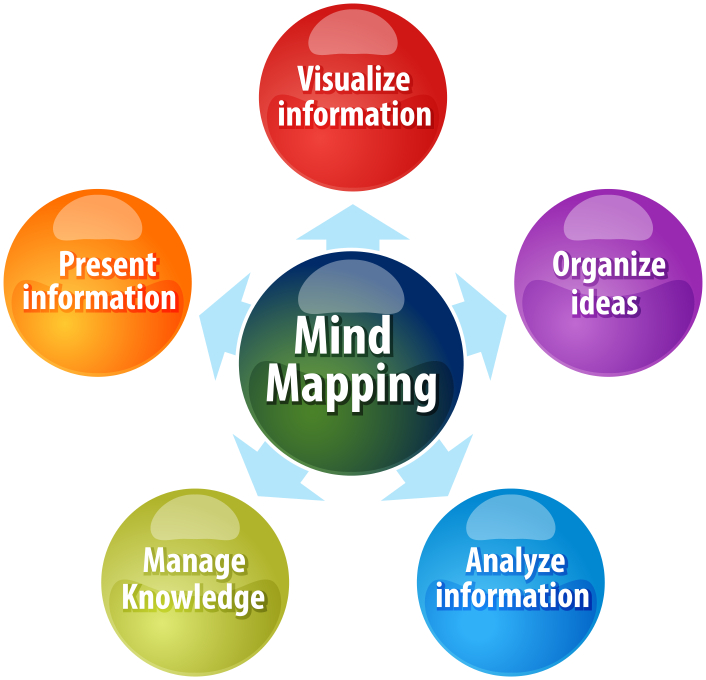
Invented by Tony Buzan as a learning and memory tool while he was struggling to take effective notes as a student, a Mind Map is a diagram used to organise all kinds of information in a more visual and memorable way. Usually, Mind Maps are created around one single topic. An image is drawn in the centre of a blank piece of paper then ideas are added around it with key ideas linked directly to the central subject, and other ideas branching out from these.

A key factor to creating a successful Mind Map is the use of colour, images and curved lines to link ideas, which encourages brainstorming and makes it easier for our brains to remember. Since the human brain finds it easier to remember images rather than words, and it thinks in multiple directions simultaneously – a Mind Map can provide a more effective problem-solving and memory tool than written notes or lists.

There are several Apps and websites available to help you create your Mind Map, or you can simply grab a piece of A4 paper and some coloured pencils and do it the old fashioned way!

7 Steps:

Step 1: Start in the centre of a blank page turned sideways. Using the paper in landscape will give your brain the freedom it needs to spread out in all directions.

Step 2: Your central idea is your career – so start with this using an image or picture to represent it. This helps you to use your imagination because an image is more interesting to the brain than words.

Step 3: Draw your main branches connected to the central image and connect your second and third level branches to the first and second levels. Your brain works by association and likes linking things together in an orderly way. Connecting the branches will help you more easily visualise your primary areas of interest and come up with ideas that relate to them.

Step 4: Make your connecting lines curved rather than straight since curved lines are more
interesting to your brain. Use a combination of colours, images, and words – which again makes it more interesting to your brain and encourages creative thinking.

Step 5: Use one key word for your main branches and then start to brainstorm all the areas you need to consider – creating this wide array of ideas helps you gain a clearer picture of where you’d like to go and how you’re going to get there.

Step 6: Use images throughout your Mind Map because it is said that every image is worth a thousand words. That means if you have only 10 images in your Mind Map, it’s the equivalent of 10,000 words of notes!

Step 7: Once you have your mind map, use it as the basis to create an execution strategy or road map if you like that will help you achieve your career dreams.

A Mind Map is a creative outlet and should be approached with an open and uninhibited mind – try not to place any limits on yourself as to the number of thoughts, ideas and connections you make.

Ideas for sub-topics include your current job, your dream job, reasons why you want your dream job, key strengths, weaknesses or areas for improvement, core values – especially things that you won’t compromise, interests, lifestyle goals, possible or required training/education, limitations or barriers, areas where you want to work, areas where you don’t want to work, companies that interest you, and role models.


Katie Roberts Career Consulting Reviews – Career Counselling

Hot Careers for 2016

Article by Belinda Fuller

Hot Careers for 2016With latest data indicating a slight increase in new job ads and steady growth throughout 2015, Australia’s job market is looking more positive than it did this time last year. SEEK data indicates increasing business confidence and hiring intentions which has had a direct impact on rising job advertisements on the site. But what areas are in highest demand?

SEEK’s outlook is supported by Manpower Employment’s most recent Outlook Survey, with 15 percent of local employers surveyed looking to increase headcount in 2016. Although this report does indicate some caution amongst Australian employers’ hiring intentions with many choosing to hedge risk by employing contractors or temporary staff.

SEEK also reported slightly less competition with fewer people applying for each advertised role, which is great news if you’re looking to review your career in 2016. With new job ads on the SEEK site achieving an annual increase of 7.8%, growth is the result of continued strength across a wide range of industries, including Healthcare & Medical, Trades & Services, Government & Defence, Education & Training, Design & Architecture, Retail & Consumer Products, and Information & Communication Technology. While market analysts have varying opinions on the state of Australia’s labour market and the future trends we can expect, SEEK has outlined the five ‘hot jobs’ for 2016. Here they are:

1: Front End Programmers – with growth of 50% over last year, this job is in high demand in Australia as we retain our position as one of the world’s top 10 e-commerce markets. SEEK expects the demand for Front End Programmers to continue in 2016 as the e-commerce industry goes from strength to strength. The demand for people with skills and experience in this field is rapidly outstripping supply, making it a favourable employment market for programmers with the right skill set.

2: Carpenters – with growth of 40% over last year, skilled carpenters are in high demand as the construction industry and real-estate market both continue to grow.

3: Site Managers – with growth of 35% over last year. Despite the steady decline for these positions in the mining and resources industry, demand for Site Managers as a whole has been buoyed by the strength of the property sector.

4: Forklift Drivers – with growth of 33% over last year – this role is also riding the e-commerce wave, as distribution centres rely on them to fulfil growing domestic and international online shopping trends.

5: Account Managers – with growth of 14% over last year – sophisticated sales professionals are in demand, as there will always be a role for people that can demonstrate commercial acumen and articulate the true value and return on investment of the solutions they are selling to acquire and nurture clients. More broadly, Account Managers act as a good forward business indicator to confidence, and with Australian Business Confidence edging up in recent months, growth for these roles are expected to continue.

While the roles listed above are SEEK’s expected job hotspots for 2016, the recent trend in job advertisements also indicates several industries with encouraging growth. These include:

  • Farming, Animals & Conservation – up 34%
  • Design & Architecture – up 32%
  • Call Centre & Customer Service – up 22%
  • CEO & General Management – up 20%
  • Community Services & Development – up 19%
  • Education & Training – up 17%

Would you like assistance from a team of Career Counsellors and Career Advisors to help you choose a career that’s right for you? If so, please see our Career Advice and Career Counselling Services.

12 professional behaviour tips

Article by Belinda Fuller

12 Professional Behaviour TipsProfessional behaviour is a form of etiquette in the workplace that is linked primarily to respectful and courteous conduct. Many organisations will have a formal code of professional conduct in place, but many do not. Believe it or not, professionalism and ethical behaviour can benefit your career and improve your chances of future success.

Being conscious of how you treat co-workers and clients, and ensuring a positive workplace attitude can help you to improve your productivity and effectiveness in the workplace. In general, professional behaviour comes down to ethics and dedication. Although possessing the necessary skills to do your job effectively is essential, having an understanding of what constitutes professional behaviour will help you develop your own high standard of work habits that could contribute to future career success.

Here are our 12 tips:

1.  Honesty: always act openly. Never share confidential, privileged or client information unnecessarily, and don’t tolerate or justify dishonest conduct by others. Report any conflicts of interest immediately.

2.  Respect: maintain a respectful attitude to others at all times, even during stressful times. Don’t lash out at colleagues or disrespect anyone (senior or otherwise). Always use appropriate language (verbally and in writing) and don’t swear. Apologise for errors or misunderstandings, and keep your personal opinions of others private.

3.  Meetings: arrive on time and be prepared by reviewing the agenda or meeting notes in advance. Make contributions to discussions where appropriate, and don’t take over when someone else is trying to talk. Respect the meeting convenor or chair, follow the appropriate format, and ask considerate questions.

4.  Communication: speak clearly and in language others can easily understand, act courteously and use good manners when engaging with others. Follow any company guidelines regarding content, read information provided before asking questions, listen to others when they are talking or explaining, and don’t engage in office gossip. Be careful of language and tone in written communications, and don’t copy in others unnecessarily when emailing (but don’t intentionally exclude others either).

5.  Time Management: don’t be late to work, instead arrive a few minutes early to settle, get your coffee and greet co-workers. Follow lunch and break schedules by leaving and returning on time. At the beginning of every day, review your schedule so you know what time you have to be where, and what workload you have on that day.

6.  Integrity: act ethically and do the ‘right’ thing at all times, always report suspicious people in the office, misconduct, or other violations of company policy. Remain impartial keeping any personal bias and intolerances out of the workplace.

7.  Safety: understand the company safety policy and report any maintenance or other hazards immediately.

8.  Corporate Goals: have an understanding of your company’s missions, goals and objectives and the role that you play in achieving those.

9.  Dress: dress in clean, appropriate clothing. Follow any dress code standards or guidelines and if there aren’t any, avoid clothing that is revealing, provocative, or includes offensive language or pictures.

10.  Accountability: take responsibility for your work and actions, do what needs to be done, and don’t leave it for others. Be honest if things go wrong, or you don’t finish something on time, then work out an effective resolution to move forward. Seek help early if you need it.

11.  Teamwork: you often need to work with people that you may not necessarily like. Set aside differences to work well with others since teamwork sometimes even outweighs performance – with people who work well with others often advancing based on that aspect.

12.  Commitment: dedication and a positive action to your role and the organisation can carry you a long way. Plus, dedication from employees is often contagious with others being inspired to go the extra effort themselves.

Essentially, being professional is about giving your best at all times. Think about how your behaviour will be perceived by others and make sure to understand and follow company codes of conduct where they exist.

Would you like assistance with your job applications? If so, please see our Resume Writing Services.

Returning to work after a break

Article by Belinda Fuller

Returning to work after a breakMany people take extended breaks from work these days for a variety of different reasons. Whether you’ve taken time off to start a family, look after an unwell parent, or see the world, returning to work can be exciting but can also often be fraught with anxiety and stress. Whatever your situation, there is sure to be a mix of emotions with the adjustment taking some time to get used to.

The thought of returning to work and the 9 to 5 grind is tough enough without beginning to think about the job search process. Whether you planned your time off or not, there is no ideal approach for everyone. These general tips should help you to think about a personalised approach:

TIP # 1 – Address your barriers – it can be difficult to come across well in an interview if you are worried about returning to work – whether you are thinking about how you will cope with the hours and your young family, the fact that you’ve lost your confidence, or that your skills have become outdated. Whatever it is you are worried about, you need to address it. If you require training or professional help, seek it. Talk to friends or colleagues who have been through a similar situation so negative thoughts can be forgotten prior to any interview.

TIP # 2 – Be honest – we are often asked, “how should I explain the break in my resume?” and our answer is always the same – “be honest without necessarily providing a lot of detail”. If you have an obvious gap in your employment history – you need to explain it. That doesn’t mean creating a job called Domestic Manager and talking up your responsibilities during that time. Running a house and caring for young children is hard, but just say something along the lines of “Parental leave until children reached school age”. Likewise if you travelled, say so, or if you were caring for an ill parent or experienced illness yourself, say so – but briefly. Mention in your cover letter your desire, keenness (and readiness) to get back into your career and focus on the skills and experience you have to offer.

TIP # 3 – Consider a functional resume format – where you focus on skills and achievements rather than a chronological history of specific roles. List skills in detail first, then cumulative career achievements, followed by training, education and professional development, volunteering roles if you’ve held any, and lastly details on the roles you’ve held and dates.

TIP # 4 – Create a volunteer section – make sure to include any volunteer work in your Resume and talk about those roles in the same way you would describe paid employment. This means focusing on achievements – ask yourself how the organisation benefited from your work and include performance metrics if you can. E.g. raising money, organising events, increasing efficiency or effectiveness, or achieving success in other ways. Rather than simply stating you volunteered, talk about what you did and how that contributed to the success of the charity or organisation.

TIP # 5 – Check your image – check your work wardrobe is appropriate for your industry. Find out what is currently acceptable so you don’t feel outdated when going for an interview.

TIP # 6 – Include a customised cover letter – specifically addressing the requirements of the position. Create a strong introduction detailing your qualifications, previous experience and desire to work in the role, with the main part focusing on addressing the specific requirements of the role (what you’ve done/achieved previously); and a convincing closing paragraph summarising your interest in, and relevance for the role. Create a compelling reason for the recruiter to contact you for an interview.

TIP # 7 – Emphasise professional development – think about taking some time to complete some relevant courses that will add to your skills (with currency). Websites such as https://www.mooc-list.com/ offer a variety of free online courses.

TIP # 8 – Stay in touch – lastly and perhaps most importantly, don’t lose touch with your industry/profession or your networks. This means taking an interest and reading/researching on a regular basis to remain updated. Likewise, build and maintain your professional networks by keeping in touch with clients, colleagues and superiors as this can be much harder to achieve down the track. Create a LinkedIn profile, join relevant groups, and commit to staying active. Even allocating one hour a week to this task will ensure you are in a much better position when you do decide to return to work, than if you’d cut yourself off completely.

Would you like career advice and assistance planning your return to work? If so, please see our Career Counselling Services.

If you are an employer and would like to assist redundant employees to secure a new role, please see our outplacement services.